Guides
Truck air brake parts: chambers, valves, dryer, slack adjusters and linings explained
How a truck and bus air brake system works, which parts fail (chambers, valves, air dryer, slack adjusters, linings) and how to identify the replacement.
- Prepared by
- CAP Parts Team
- Published
- Reading time
- 5 min read
- References
- 3 sources
Key takeaways
An air brake system has three parts: supply (compressor, dryer, tanks), control (valves) and the brake units at the wheels (chamber, slack adjuster, cam, shoes, drum).
Most air-brake faults are air leaks or moisture: chamber diaphragms, valve seals, dryer cartridge and drain valves.
Slack adjusters, shoes, linings and drums are wear items; their condition decides how far the chamber pushrod must travel.
To replace a chamber or valve, you need the part number or the mounting photos, the axle position and the size marking.
Brake parts are safety parts: have them fitted and tested by a qualified workshop.
On this page
Short answer: A truck or bus air brake system uses compressed air from an engine-driven compressor, stored in tanks, to push brake chambers that turn the brake cam through a slack adjuster. The parts that most often need replacing are brake chamber diaphragms, valves, the air dryer cartridge, slack adjusters, linings or shoes and drums. To order the right one, send the part number or clear photos, the axle position and the vehicle VIN.
How the system works
Descriptions from driver-licensing manuals and general references agree on the structure.
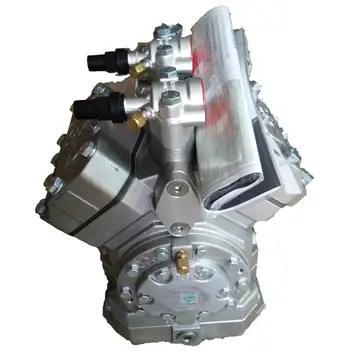
- Supply: an air compressor, driven from the engine, fills the reservoirs. A governor controls when it loads and unloads. An air dryer removes moisture and oil from the air; compressed air always carries some water and compressor oil, and the tank drain valves let it out.
- Control: the brake foot valve meters air when you press the pedal. A four-way protection valve splits the supply into circuits, so a leak in one does not empty all. Relay valves speed up air delivery to the rear. The hand control valve controls the parking brake.
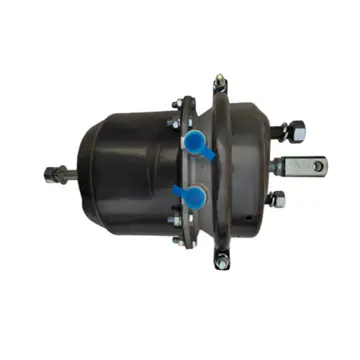
- Brake units: air enters the brake chamber and pushes a rod. The rod moves the slack adjuster, which twists the camshaft; the S-cam spreads the shoes against the drum. When the pedal is released, a spring pulls the shoes back.
- Parking and emergency: the parking brake is held on by spring force and released by air pressure, so a sudden loss of air applies the spring brakes.
Disc brakes with air actuation also exist; they use a chamber and a power screw instead of an S-cam. Drum S-cam brakes remain the most common type in older general references, so check which you have.
What fails, and what to replace
| Symptom | Likely group | Parts commonly involved |
|---|---|---|
| Air hiss when the brake is applied or released | Chamber, valves, fittings | Brake chamber diaphragm, brake valve seals, pipes, drain valves |
| Compressor runs a lot, pressure builds slowly | Supply | Air compressor, governor, leaks downstream |
| Water or oil in the tanks, freezing in cold climates | Dryer | Air dryer and its cartridge, drain valves |
| Long pedal travel, weak braking | Adjustment and wear | Slack adjuster, shoes, brake lining, drum |
| One wheel dragging or hot | Release | Chamber return spring, sticking adjuster, valve not exhausting |
| Parking brake will not hold or will not release | Spring brake | Spring chamber, hand valve |
| Uneven braking front to rear | Control | Relay valve, four-circuit protection valve |
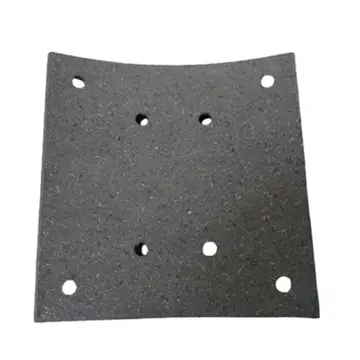
Linings and drums wear with every stop and, in hills or heavy loads, heat. The heat a drum can take depends on how hard and how long the brakes are used. Replace linings with shoes and check the drum surface at the same time.
How to identify the replacement
- Chamber: read the markings on the body, photograph the clamp ring and the mounting flange, and say whether it is a service chamber or a spring-brake chamber, and front or drive axle. Photograph the pushrod and clevis.
- Valves: every valve has a number on the body. Photograph it with the port markings and count the connections.
- Air dryer: photograph the housing label and the pipe connections; say whether you need the whole unit or the cartridge.
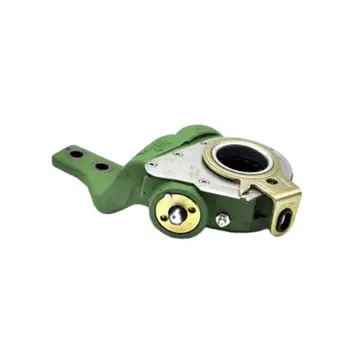
- Slack adjuster: say whether manual or automatic, photograph the arm with the spline end, and note the mounting position.
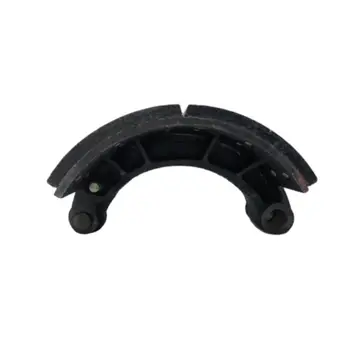
- Shoes, linings and drums: measure drum diameter and lining width, and photograph the shoe.
If the old part has no readable number, send photos from several sides with a ruler. We never match a part by name alone.
A simple inspection routine
Most air-brake faults are cheaper when caught early. A routine that any fleet can use, with intervals and limits taken from the vehicle manual:
- Drain the tanks regularly, and look at what comes out. Water is normal; a lot of oil points to the compressor or dryer.
- Listen for leaks with the system charged, with the brake applied and released, and with the engine off.
- Watch how fast pressure builds and how fast it drops. Slow build or fast drop is the first sign of a leak or a tired compressor.
- Look at the pushrod travel on each chamber and compare the wheels on one axle. Large or uneven travel means adjustment or wear.
- Check boots, clamps, hoses and fittings for cracks, rust and rubbing.
- Pull the wheel at service time and inspect shoes, linings and drums together.
Keep a list of what was replaced and when, per vehicle. A dealer or fleet that orders the same chamber, adjuster and valve numbers every year saves time by filing the numbers once.
Chinese trucks and buses
Chinese truck and bus makes use the same air-brake architecture but with their own part versions. Our air brakes part group lists the part types, and the brand pages (Sinotruk HOWO, Shacman, FAW, Dongfeng) show the typical setup. For coaches and city buses see brake parts for buses. Never assume a chamber or valve fits a truck because it looks similar; send the details and we confirm.
For dealers and fleets: ordering well
Air-brake parts are repeat-order items, so a little structure goes a long way. File the chamber, valve and adjuster numbers per vehicle type, with a photo of each old part. Separate service chambers from spring-brake chambers on the order, and name the axle on every line. Order wear items (linings, shoes, dryer cartridges, drain valves) in sets that match the service plan, and keep the old parts until the new ones are checked against them. Dealer and wholesale terms are by agreement, so contact us with your expected volumes.
Safety note
Air-brake parts are safety parts. Fit them with the correct tools, test for leaks and set the brakes up according to the vehicle manual. Have a qualified brake mechanic check the work.
What to send us for a quote
- Part name and quantity, or the symptom
- Part number or photos of the markings, mounting and connections
- Axle position (front, drive, trailer) and brake type (drum or disc)
- VIN or chassis number
- Drum diameter and lining width for shoes and drums
- Destination country
Use the quote form; we reply with recommended parts and confirm the version before you order.
Truck part groups to look at
Frequently asked questions
- What are the main parts of an air brake system?
- Compressor, governor, air dryer, reservoirs, valves (foot, relay, hand, protection), brake chambers, slack adjusters, S-cams, shoes with linings and drums.
- What does a brake chamber do?
- It converts air pressure into mechanical push. A diaphragm moves a pushrod that operates the slack adjuster and the brake.
- Why does my air dryer matter?
- Compressed air carries moisture and oil. The dryer removes them to protect valves and prevent freezing in cold weather; defective dryers are a known cause of ice in the system.
- What does a slack adjuster do?
- It links the chamber pushrod to the camshaft and sets the distance the shoes travel. Automatic types adjust for wear.
- How do I know which brake chamber to buy?
- Send the markings on the old chamber, mounting photos, whether it is a service or spring-brake chamber and the axle position. Size alone is not enough.
- Can I fit the parts myself?
- Only if you are trained. They are safety parts; fit, test and adjust them to the vehicle manual or use a qualified workshop.
Sources
- [1]Air brake (road vehicle). Wikipedia.
- [2]Georgia Commercial Driver Manual, Section 5: Air Brakes. Georgia Department of Driver Services.
- [3]Air Brake Components in Trucks and Buses. Brennan Industries.