Guides
Importing Truck Spare Parts into Africa: HS Codes, Conformity Certificates and Paperwork
Importing truck spare parts into Africa: HS code basics, conformity programmes (SONCAP, PVoC, Ivory Coast VOC) and the documents to prepare.
- Prepared by
- CAP Parts Team
- Published
- Reading time
- 8 min read
- References
- 12 sources
Key takeaways
Truck parts are usually classified under HS heading 8708 (parts and accessories of motor vehicles of headings 8701 to 8705), but tyres, batteries, filters and engine parts can sit in other headings; your clearing agent decides the national code.
Several African markets require a certificate of conformity before shipment (for example Nigeria's SONCAP and Cote d'Ivoire's VOC for automotive spare parts from 1 July 2026); the exact scope changes, so confirm current rules before you order.
Prepare the same core documents every time: commercial invoice, packing list, bill of lading, certificate of origin if requested, plus the conformity certificate where required.
Invoice descriptions must be specific (part name, part number, material, quantity, unit value); vague lines such as "truck parts" cause queries and delays.
Always confirm current rules with your clearing agent; programmes, fees and product lists are revised.
On this page
Short answer: Truck spare parts are normally declared under HS heading 8708 (parts and accessories of the motor vehicles of headings 87.01 to 87.05), with national codes added by each country. Several African markets also ask for a pre-shipment conformity certificate, so check the programme for your destination before you place the order and confirm current rules with your clearing agent.
Step 1: understand the HS code
The Harmonized System (HS) is the international product code maintained by the World Customs Organization. It has more than 5,000 commodity groups, each with a six-digit code, and is used by more than 200 countries and economies for their customs tariffs and trade statistics (WCO). The first six digits are shared; countries add their own digits after that for their tariff.
For truck and bus parts:
| Item | What to know |
|---|---|
| Heading 8708 | “Parts and accessories of the motor vehicles of headings 87.01 to 87.05” (tractors, buses, goods vehicles and others). Many chassis, brake, steering and driveline parts are declared here |
| Other headings | Some truck parts are not in 8708: tyres, batteries, filters, engine components, lamps and electrical items often have their own headings. Ask your clearing agent to confirm each product |
| National subdivision | Duty rates and extra digits are national. Broker websites show example rates, but they can be out of date; use the official tariff or your agent |
| Why it matters | The code decides duty, VAT base, and in several countries whether a conformity certificate is required |
The Angolan example shows how broad the list can be: a 2025 cargo-compliance note names HS 8408.20, 8708.40, 8706, 8707, 8708.94, 8708.80 and 8708.50 as headings that need prior authorisation under Presidential Decree 155/20 (commercial source; confirm with the Angolan authority).
Step 2: conformity programmes by market
Many African and neighbouring markets run a pre-shipment verification of conformity programme (often called PVoC or similar). The goods are checked, or documents reviewed, in the exporting country, and a certificate of conformity (CoC) goes with the shipment. Only entries backed by a published source are listed below.
| Market | Programme / rule (as found) | Notes |
|---|---|---|
| Nigeria | SONCAP is a pre-shipment verification process that checks imported products against Nigerian standards before shipment (SON). SON and NADDC have also launched VehCAP, a pre-import framework for vehicles and automotive components (allAfrica, 2026) | Ask your clearing agent whether SONCAP or VehCAP covers your part codes and from when VehCAP applies |
| Ghana | From 1 July 2026 the EasyPass PVOC programme ends and the Ghana Standards Authority takes over conformity assessment; certificate requests go to GSA (VATupdate) | Ask your agent whether spare parts fall in scope after the handover |
| Cote d’Ivoire | From 1 July 2026 (bill of lading date) the PCA/VOC scope lists “Automotive spare parts, accessories and lubricants” and “Used goods”; all HS codes in these families need a certificate unless identified as non-regulated (SGS) | Exclusions include goods for oil and mining operations under the mining and petroleum codes |
| Cameroon | The pre-shipment conformity programme (PECAE) was extended to all imported goods from 15 November 2021 under Decree 2021/3306/PM; a CoC is needed for clearance (SGS) | Ask your agent which standards apply to your part |
| Uganda | A PVOC certificate is among the mandatory import documents (US International Trade Administration) | Ask your agent whether spare parts need the certificate |
| Kenya | In 2019 KEBS said it had not banned used spare parts as a whole; the ban applies to specific used parts only (The Standard) | 2019 statement; check the current KEBS PVoC manual |
| DR Congo | Bureau Veritas runs pre-shipment verification under the OCC contract; imports with an FOB value below USD 2,500 are outside the programme (Bureau Veritas datasheet, 2024) | Confirm the contract is still in force |
Programmes change names, operators and product lists. This is why the safest wording in any quote is: confirm current rules with your clearing agent before the order is released.
Step 3: documents checklist
Prepare the same file for every shipment and check each item against the others (names, quantities, values):
- Commercial invoice with part names, part numbers, quantities, unit and total values, Incoterm and currency
- Packing list with cartons, gross and net weights, marks that match the invoice lines
- Bill of lading or airway bill
- Certificate of origin, when your agent or tariff preference requires it (broker sources note that a valid certificate is needed to claim reduced trade-agreement rates)
- Certificate of conformity from the approved verification company, where the market requires it
- Import licence or authorisation where your country asks for it (for example the Angolan prior authorisation mentioned above)
- Insurance document, when you buy CIF or arrange cover yourself
Step 4: how to avoid delays
- Describe each line. “Brake chamber, part number, quantity” is better than “truck parts”. Part number, material and use help the officer classify correctly.
- Keep new and used apart. Used goods can be regulated differently; Cote d’Ivoire lists “Used goods” in its conformity scope, and Kenya’s 2019 statement concerns specific used parts.
- Match documents. A conformity certificate that does not match the invoice lines or values can stop clearance.
- Time the certificate. In several programmes the certificate is tied to the date on the bill of lading, so apply before loading.
- Plan the corridor. Landlocked destinations add transit paperwork. Mombasa, for example, handled 15.88 million tonnes of transit cargo in 2025, mainly for Uganda (Kenya Ports Authority via Wikipedia).
Step-by-step timeline: from order to clearance
Work backwards from the day the goods must be on the shelf. The order below is the usual sequence; your agent may change it.
- Before the order. Give your clearing agent the part list and ask three questions: which HS code applies to each line, whether the destination requires a conformity certificate for these codes, and what duty and VAT base applies. Keep the answers in writing and attach them to the order.
- Order confirmation. Put the agreed Incoterm, the named port and the document list in the order. State who applies for the certificate and who pays the verification fee.
- Before production or packing is finished. If a programme needs a certificate tied to the bill of lading date, start the application now. Send the verification company the invoice draft, packing list and product information it asks for.
- Before loading. Check that the invoice lines, packing list, cartons and certificate all describe the same goods. A single wrong part number or quantity is enough to cause a query.
- Shipping. Send the bill of lading draft to your agent early; they will check names, consignee details and the notify party before it is final.
- Arrival and clearance. The agent files the declaration with the invoice, packing list, bill of lading and certificates. If customs asks questions, answer from the part numbers and photos on file.
- After clearance. Keep the full document set. It helps with the next order and with any later audit.
Who issues which document
| Document | Issued by | You should check |
|---|---|---|
| Commercial invoice | The seller | Part numbers, quantities, unit and total values, currency, Incoterm |
| Packing list | The seller | Carton count, weights, marks that match invoice lines |
| Bill of lading or airway bill | The carrier or forwarder | Consignee, port names, description, container and seal numbers |
| Certificate of origin | A chamber of commerce or other issuing body in the exporting country | Exporter name, goods description, destination |
| Certificate of conformity | The verification company appointed by the destination programme | Matches invoice lines and values; date |
| Import authorisation, where required | The authority in the destination country | Validity, goods covered, quantity |
| Insurance certificate | The insurer, when cover is arranged | Insured value and route |
Common reasons shipments are held, and how to avoid them
- Documents that do not match. Invoice, packing list and certificate must agree on names, quantities and values. Draft them together and compare before they are issued.
- Vague goods descriptions. “Truck parts” invites questions. Use part name, part number and use.
- A missing certificate or one issued too late. Where the programme ties the certificate to the loading date, apply before the goods leave. Ask your agent for the cut-off.
- The wrong HS code. If you guessed the code, officers may reclassify the goods. Have the agent confirm the code per part, and keep a note of why.
- Used items mixed with new ones. Keep them on separate invoice lines or separate shipments, because used goods can be regulated differently.
- Goods outside the agreed scope. Do not add extra items at the last minute; each added line needs its own description and, where relevant, certificate cover.
- Unclear who pays what. Duties, certificate fees and storage charges are easier to manage when the order says who pays which cost.
What to send us for a quote
- Destination country, port or inland city, and whether it is a transit shipment
- Your clearing agent’s name and any programme certificate you need (SONCAP, PVoC, VOC or other)
- List of parts with part numbers, or photos of nameplates, plus VIN where possible
- Preferred Incoterm
- Any invoice wording or HS code your agent has given you
Send it through the quote page or contact us. Documents, certificates and who arranges them are agreed per order.
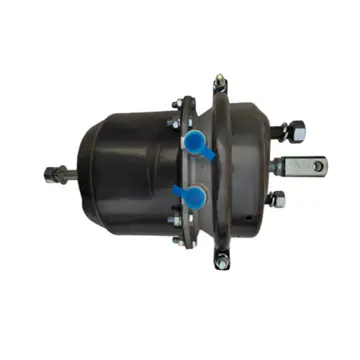
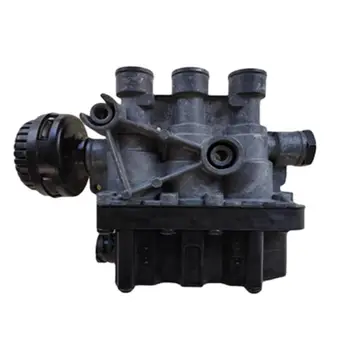
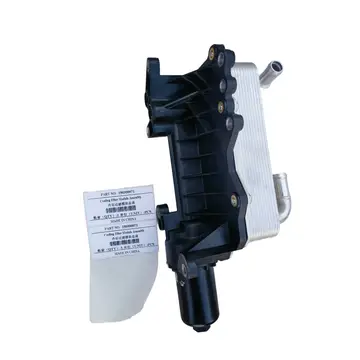
For market notes see our country pages; for a general supplier checklist read how to buy from China. Typical parts that move in service orders: air brake parts and cooling and filtration.
Truck part groups to look at
Frequently asked questions
- What is the HS code for truck spare parts?
- Many truck parts fall under HS heading 8708, "parts and accessories of the motor vehicles of headings 87.01 to 87.05". Tyres, batteries, filters, engine parts and electrical items can be in other headings, and each country adds its own digits. Ask your clearing agent to confirm the code per part.
- What is the difference between a 6-digit and a 10-digit HS code?
- The first six digits are common to the Harmonized System. Countries add digits for their own tariff, so the full code and duty rate differ by country.
- Do I need a certificate of conformity to import truck parts into Africa?
- It depends on the country and the product code. Examples: SONCAP in Nigeria, the PVoC or successor programme in Ghana and Uganda, and the PCA/VOC programme in Cote d'Ivoire, which lists automotive spare parts from 1 July 2026. Confirm current rules with your clearing agent.
- Can I import used truck spare parts?
- Some markets restrict or regulate used goods; Cote d'Ivoire lists used goods in its conformity scope and Kenya bans specific used parts. Check the rule for your country before ordering used items.
- Which documents does a truck parts shipment need?
- Commercial invoice, packing list, bill of lading, and where required a certificate of origin, a certificate of conformity and any import authorisation.
- Who applies for the certificate, the buyer or the supplier?
- This depends on the programme and contract. Usually the exporter supplies product information and documents to an appointed verification company. Agree in the quote who does what and who pays.
- Where can I check current rules?
- Ask your clearing agent and check the national customs and standards body pages; programme operators such as SGS and Bureau Veritas also publish notices.
Sources
- [1]What is the Harmonized System (HS)?. World Customs Organization.
- [2]HS Code 8708.29 - Parts and accessories of the motor vehicles of headings 87.01 to 87.05. JLog (customs broker).
- [3]SONCAP. Standards Organisation of Nigeria.
- [4]Ivory Coast Extends PCA Requirements to Additional Product Categories. SGS.
- [5]Nigeria: SON, NADDC Launch Vehcap to Curb Substandard Vehicle Imports. allAfrica.
- [6]Ghana Ends EasyPass PVOC Programme From 1 July 2026. VATupdate.
- [7]Extension of Cameroon Pre-Shipment Conformity Assessment Program to all Imported Goods. SGS.
- [8]Uganda Country Commercial Guide - Customs Regulations. US International Trade Administration.
- [9]KEBS denies banning importation of used car spare parts. The Standard (Kenya).
- [10]Verigates - DR Congo Datasheet Rev 26. Bureau Veritas.
- [11]New ECTN guidelines for vehicle components to Angola. GetCTN.
- [12]Port of Mombasa. Wikipedia (citing Kenya Ports Authority).