Guides
HOWO Electrical Parts: Starters, Alternators, Sensors, Switches and Lamps — How to Order
How to identify and order electrical parts for Chinese trucks: starters, alternators, sensors, switches, lamps and fuse boxes, and what to photograph.
- Prepared by
- CAP Parts Team
- Published
- Reading time
- 7 min read
- References
- 3 sources
Key takeaways
Read the voltage and output on the label of the old starter or alternator instead of assuming: one older HOWO cargo-truck specification lists a 24 V system with two 12 V batteries, but other trucks and newer models can differ.
A starter or alternator is matched by engine, mounting, rotation and connector layout, not only by voltage; a photograph of the old part and the engine plate settles it.
Order alternator wear parts (regulator, rotor, stator) separately only when you know which one failed; otherwise replace the complete unit.
Sensors, switches and relays cause the most stopped trucks per money; identify them by the number on the old part and the connector shape.
Fuse boxes, lamps and switches are cab-specific: send the cab model, the position and the connector photo.
On this page
Short answer: Order electrical parts for Chinese trucks and buses by the label on the old part, not by the truck badge. Photograph the starter or alternator plate (voltage, output, number), the mounting and the connector, and send the VIN and the engine plate. For sensors, switches, lamps and fuse boxes, send the number on the old part, the connector and the position on the truck.
What this group covers
The electrical system is a mix of heavy rotating machines and many small parts. When we list parts for a truck or a bus, the electrical family is made of:
- Starting and charging: starter motor, alternator, regulator, rotor, stator, belts and the battery isolator.
- Sensors: oil pressure, coolant temperature, fuel level, crankshaft speed, common rail pressure, ABS wheel speed and brake wear sensors.
- Switches and relays: key and start switches, gear selector switches, pressure switches, relays and CAN repeater relays.
- Lighting and signals: headlamps, tail lamps, indicators, work lamps and bulbs.
- Fuses and wiring: fuse and relay boxes, connectors, harness repairs.
Our electrical and lighting group shows the truck families; for buses, the electrical system page and the bus door, pump and body electrical guide cover the rest.
The voltage question
The first thing a buyer asks is “is it 24 volt?” The honest answer is: check the label. An older Sinotruk HOWO cargo-truck specification sheet lists the electrical system as 24 V, with a 1,540 W generator, a 7.5 kW starter and two 12 V 165 Ah batteries. That is one truck, one engine family and one emission level, and it was written for a model of that period. So the rule is simple: for any truck or bus not covered by a source you hold, write “check the system voltage on the label”. The voltage printed on the old alternator plate, the battery labels and the starter plate settle it, and a part ordered to the wrong voltage is a total loss.
Starters
A starter motor is selected by more than voltage:
| What to check | Why it matters | How to give it to us |
|---|---|---|
| Voltage and power on the plate | A different rating will not crank, or will burn out | Photo of the plate or the casing marking |
| Engine make and model | The mounting flange and the flywheel teeth differ | Engine plate photo |
| Mounting pattern and bolt holes | The housing has to match the engine | Photo of the front and the mounting face, bolt-hole distance |
| Pinion tooth count and rotation | A wrong pinion does not mesh | Photo of the pinion end; note clockwise or anticlockwise |
| Solenoid and terminal layout | The wiring has to reach the terminals | Photo of the terminals and the connector |
| Reduction (gear) type or direct drive | The two types look different and are not interchangeable | Photo of the whole unit |
We list a reduction starter motor as an example of the type; we do not claim it fits any given truck, and we confirm the exact version from the VIN, the engine plate and photos. See the electrical group for other starter types.
When a truck cranks slowly, check the batteries, the battery cables, the ground strap and the terminal condition before ordering a starter; a poor ground can look like a failed starter. After a starter failure, check the ring gear on the flywheel for damage. These are workshop basics and apply to any truck.
Alternators
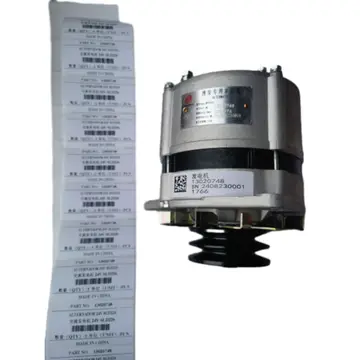
A seller page for a HOWO alternator describes the alternator’s job in plain words: it charges the battery and powers the electrical loads while the engine runs. Ratings differ between alternators, so read the label rather than a listing. To avoid a wrong order:
- Photograph the label on the alternator body (voltage, amps, number).
- Count the belt grooves and measure the pulley diameter, or photograph the pulley face.
- Photograph the mounting feet and the connector or terminals from the back.
- Note the engine make and model.
- Ask whether the regulator is built in; many Chinese truck alternators have one, and a separate regulator is sold for some types.
Wear parts such as the regulator, rotor and stator are sold separately, for example an alternator regulator, an alternator rotor and a complete alternator under the number shown on that page. Replace a part only when the failure points to it; if you do not know which part failed, replace the whole unit with the matching belt, because an old tired belt takes out the new alternator’s bearings. A bus alternator and starter may differ from a truck one, so send the bus model.
Sensors, switches and relays
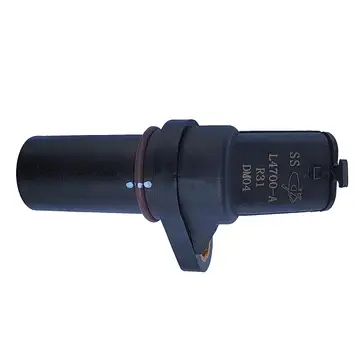
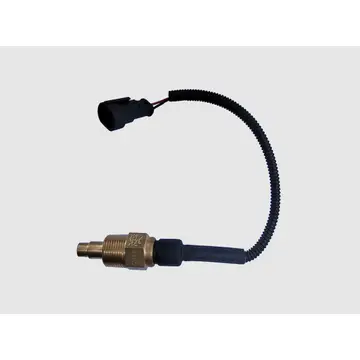
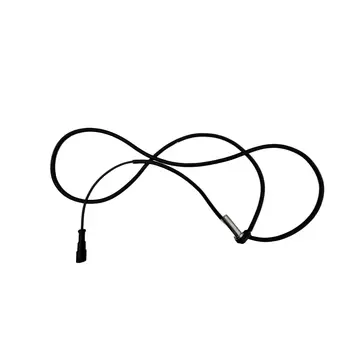
Small parts stop more trucks than starters do. Typical failures are an oil pressure sensor that gives a false warning, a coolant sensor that reads wrongly, a fuel level sender that sticks, a crankshaft speed sensor that kills the engine, and a brake wear sensor that trips the warning. The sensors in our catalogue include oil pressure sensor, coolant temperature sensor, crankshaft speed sensor and ABS sensor. These are examples of what we list.
Identify each one by:
- The number on the old part, or on the label if the casing has one.
- The connector: number of pins, shape and the locking tab; photograph it in line with the old part.
- The thread, length and sealing washer for a screw-in sensor.
- The position on the engine or axle, and left or right where relevant.
- The engine make and model, and the emission level, because sensors differ with emission equipment.
Switches and relays are matched in the same way, plus the function. Pressure switches, gear selector switches and CAN relays are not interchangeable between versions even if they look alike; do not rely on a likeness. See the air brake parts guide for the air-pressure switches.
Lamps, switches and fuse boxes in the cab
Cab-specific parts depend on the cab model, the year of build and options. For lamps, send the position (headlamp left or right, fog, tail, indicator), the connector, and a photo of the lens from the front and the back. For switches in the dashboard, send the number on the switch and a photo of the panel with the symbol. For fuse and relay boxes, send a photo of the box with the cover open, the cover diagram, and the cab model, because the layout is a map of the truck’s options. Bulbs should be ordered by the base type and voltage printed on the old bulb or the lamp housing; do not fit a 12 V bulb in a 24 V circuit.
Common mistakes
| Mistake | What happens | Fix |
|---|---|---|
| Assuming the voltage from the truck badge | Wrong-voltage part, wasted order | Read the plate, ask us to check |
| Replacing a starter when the ground is poor | The new starter cranks slowly too | Check batteries, cables and ground first |
| Fitting a new alternator on a worn belt | Bearing failure, belt slip | Replace the belt and tensioner with it |
| Ordering a sensor by name only | Wrong connector or thread | Send number, connector photo and engine plate |
| Re-using a corroded connector | Intermittent faults | Replace the connector or repair the pins |
| Ordering a fuse box by truck model | Wrong layout for the options | Send the cab model and a photo of the box |
What to send us for a quote
- The VIN, or the chassis plate photo.
- The engine plate photo (make, model, emission level).
- A photo of the label on the old starter or alternator, plus mounting and connector photos.
- For sensors, switches and relays: the number, the connector and the position.
- For lamps and fuse boxes: the cab model, the position and photos from the front and the back.
- The system voltage shown on the label or on the batteries, and how many trucks you service.
Use the quote page or contact; we confirm the exact version before quoting. For a fleet starting a spares list, read the first-year spares guide, and for first steps on any truck, how to identify a truck before ordering. The Shacman brand page and the FAW Jiefang page show other makes we cover.
Truck part groups to look at
Frequently asked questions
- Are HOWO trucks 24 V?
- One older HOWO cargo-truck specification sheet lists a 24 V system with two 12 V batteries, but other trucks and newer models can differ. Read the voltage on the old alternator plate and the battery labels, and send the VIN so we confirm the exact version.
- How do I order a HOWO starter motor?
- Send a photo of the plate on the old starter (voltage, power, number), the mounting face, the pinion end and the terminals, plus the engine plate and VIN. A starter is matched by engine, mounting, rotation and terminals, not only by voltage.
- What does a truck alternator 24 V listing mean?
- It means the seller says the alternator is for a 24 V system. Do not rely on the listing: read the voltage and output on the label of your old alternator and the battery labels, and send them to us.
- Can I replace only the alternator regulator or rotor?
- Yes, if the failure points to that part, but if you are unsure which part failed, replace the complete unit together with the belt. A worn belt shortens the life of a new alternator.
- My starter cranks slowly. Is it the starter?
- Not necessarily. Check the batteries, cables, terminals and the ground connection first; a poor ground looks like a failing starter. Then check the ring gear before ordering.
- How do I order a sensor for a Chinese truck?
- Send the number on the old sensor, a photo of the connector, the thread and length, its position and the engine plate. Sensors differ with the emission level and engine version.
- Which lamps and fuse boxes fit my cab?
- That depends on the cab model and the options. Send the cab model, a photo of the lamp from the front and back, or of the fuse box with its cover diagram, and we confirm the exact version.
Sources
- [1]Basic Configurations and Technical Parameters of HOWO Cargo Truck (4x2, EU II). cargotruckforsale (blog).
- [2]Genuine HOWO Truck Alternator and Belts (listing). MultiStar Parts (seller).
- [3]Sinotruk HOWO spare parts catalog list (seller catalogue). AutofromChina.