Guides
HOWO and Shacman Clutch Kit: Disc, Pressure Plate, Release Bearing and Booster
How to identify the right clutch for HOWO and Shacman trucks and when to replace the whole kit: disc, pressure plate, release bearing and clutch booster.
- Prepared by
- CAP Parts Team
- Published
- Reading time
- 8 min read
- References
- 1 source
Key takeaways
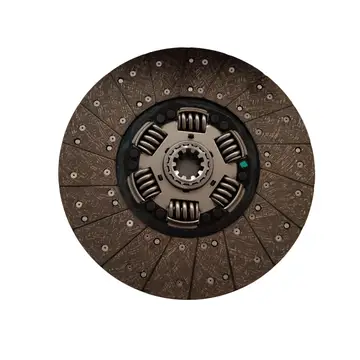
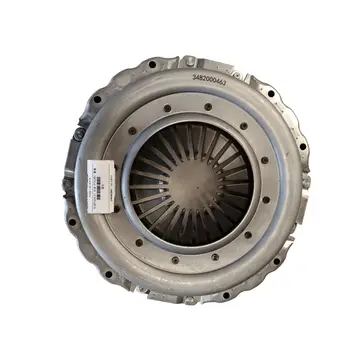
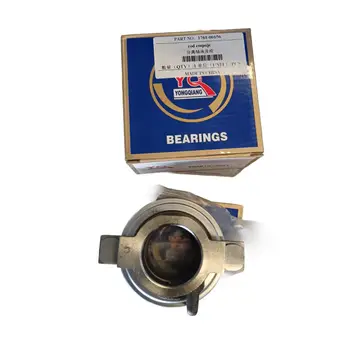
A clutch set is disc, pressure plate (cover) and release bearing. When one of them is replaced for wear, the other two are normally replaced with it, because they have worn together.
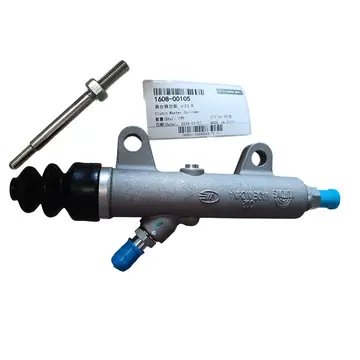
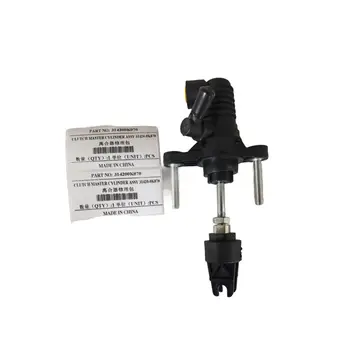
The booster, master cylinder and slave cylinder are a separate circuit. A new kit on a leaking or weak booster will still give a poor pedal, so check the circuit in the same job.
Identify the clutch from the data on the old disc and cover, the gearbox and engine nameplates and the VIN. Measure disc diameter and spline on the old part rather than guessing.
Check the flywheel face, pilot bearing, release fork and guide sleeve while the gearbox is out. They are cheap compared with a second gearbox removal.
Send us the part number, VIN or photos and we confirm the exact version before you pay. We do not match by truck model name alone.
On this page
Short answer: A truck clutch kit is the clutch disc, the pressure plate (clutch cover) and the release bearing, and they should be replaced together when the clutch is worn out. The actuation parts, such as the booster and the master and slave cylinders, are checked in the same job but ordered as separate parts. To get the right version for a HOWO or Shacman truck, identify it from part numbers, the gearbox and engine plates and the VIN, then have us confirm it before ordering.
What is in a clutch kit, and what is not
Sellers use the word “kit” in different ways, so read the contents before you compare prices. A workshop guide from the Polish distributor Autos, written around Valeo kits, lists a kit as the pressure plate housing assembly, the clutch disc and the release bearing, together with assembly instructions. The same guide tells the fitter to check the guide sleeve and the gearbox input shaft when the release bearing is changed, and to keep grease off the disc lining because it lowers friction. Other sellers sell the release bearing separately, or add a pilot bearing. When you ask for a quote for a HOWO or Shacman truck, write down exactly what you expect in the set.
| Part | Job | Replace with the kit? |
|---|---|---|
| Clutch disc | Friction plate between flywheel and pressure plate, splined to the gearbox input shaft | Yes, it is the main wear part |
| Pressure plate (clutch cover) | Clamps the disc against the flywheel; its diaphragm spring wears and loses force | Yes, normally as a pair with the disc |
| Release bearing | Pushes the diaphragm fingers when the pedal is pressed | Yes, it is cheap compared with a second gearbox removal |
| Pilot bearing or bush | Supports the gearbox input shaft in the flywheel or crankshaft | Check, replace if rough or loose |
| Release fork, guide sleeve | Move and guide the release bearing | Check for wear and scoring, replace if worn |
| Flywheel | Friction face for the disc | Inspect; machine or replace if scored, cracked or blued |
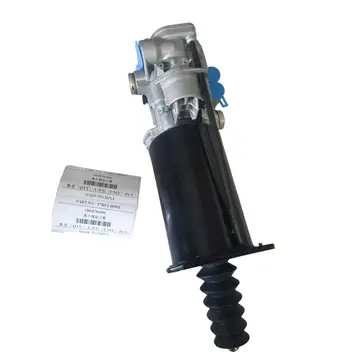
| Booster, master cylinder, slave cylinder | Actuation of the clutch from the pedal | Separate parts: test and replace by condition |
How to identify the clutch you have
Many Chinese heavy trucks run the same gearbox families across several trucks, and the same truck name can leave the factory with different engines and clutches. That is why a truck model name is not enough to pick a clutch. Our guide to identifying a Chinese truck before ordering covers the VIN and nameplates in more detail; for the clutch the useful data are these.
- VIN and build year. Photograph the VIN plate and write the year of build.
- Engine and gearbox plates. The engine model and the gearbox model are what decide the clutch size and the housing. If you run a HW19710 gearbox, say so; the same HOWO name can have another gearbox.
- Part numbers on the old parts. The disc usually carries a number on the hub or the friction ring, the cover on its outer rim or label. Clean them and photograph them in daylight.
- Disc diameter. Measure the outside diameter of the old lining with a tape and write it in millimetres. Do not rely on memory.
- Spline. Count the splines in the hub and measure the hub bore. A disc with the right diameter and the wrong spline is the most common way to waste a freight shipment.
- Cover type. Photograph the cover from the gearbox side, showing the fingers, and from the flywheel side, showing the mounting holes. Count the bolts.
- Release bearing. Photograph the face that touches the fingers and the back that sits on the fork.
If your old parts are missing, the VIN and the gearbox and engine plates are enough to start, but we will still ask for photos of the bell housing and the flywheel before we confirm.
Signs that the clutch needs attention
These are general workshop signs, not figures for a particular truck. Always read the manual for your gearbox and clutch.
- Slip: engine revs rise without matching road speed, usually worse under load or on a hill.
- Drag or hard gear selection: gear changes grind when the vehicle is stationary, or the clutch will not fully release.
- Judder: the truck shakes when moving off. Causes include oil on the lining, a scored flywheel or a worn pressure plate.
- Noise when pressing the pedal: a rough or rattling sound can point to the release bearing or pilot bearing.
- High or heavy pedal, or a pedal that sinks: look at the booster, master and slave cylinders, hoses and fluid before you blame the disc.
On mining and tipper work the clutch is used hard, see what wears first on a HOWO tipper. In that kind of use, a clutch that is replaced early because of oil contamination or a leaking seal is cheaper than one that burns out in the field.
The booster and the hydraulic circuit
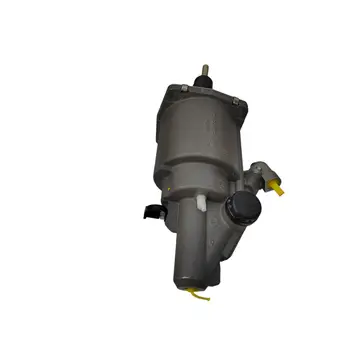
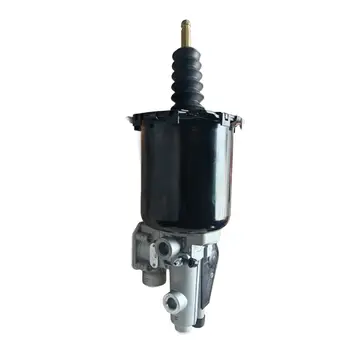
A clutch booster, sometimes called a clutch servo, reduces the pedal effort on heavy trucks. In the usual layout the pedal drives a master cylinder, a pipe carries the pressure to a booster that uses vehicle air to help, and a slave cylinder or rod operates the fork. If you search for “truck clutch booster”, you will see many boosters that look alike but have different stroke, port positions and connection types. Our catalogue lists several, for example clutch booster 1604-00349, clutch booster 17RF2-00501 and clutch booster 1604-00509. They are examples of what we list, not a statement that a particular booster fits your truck; send the old booster number or a photo of the ports and mounting.
What to check when the pedal is heavy or the clutch does not release:
- Look for fluid on the booster body, the master cylinder and the pipes, and for fluid on the clutch housing.
- Check the fluid level and condition in the reservoir. Dark or milky fluid means the system needs bleeding and probably new seals.
- Check that the vehicle air supply to the booster is present when the engine runs.
- Press the pedal and watch the push rod movement at the booster and the fork. A rod with lost motion points to the master cylinder or the linkage.
- Bleed the circuit after any component is replaced, following the truck manual.
A new disc and cover do not cure a leaking slave cylinder. If the truck is already in the workshop, order the repair parts together: see also the clutch repair kit 314200K070 and the clutch slave cylinder 1604-00210 pages for the style of parts we list.
Whole kit or single part
| Situation | What we would normally recommend | Why |
|---|---|---|
| Disc worn to the rivets, truck has done heavy work | Disc, cover and release bearing together | The cover spring and the bearing have worked as long as the disc |
| Clutch oiled from a leaking rear main seal or gearbox seal | Fix the seal first, then replace the disc and clean or replace the cover | Oil on the lining returns the problem |
| Cover cracked or heat-checked, disc still thick | Cover and disc together; check the flywheel | A new cover on an old disc wears the new part faster |
| Only the release bearing is noisy but gearbox is not out | Order the bearing, and plan to fit the full set at next opportunity | Many workshops fit a bearing alone only as a stop-gap |
| Pedal heavy or sinking, clutch grips | Test the circuit; replace booster, master or slave by condition | The friction parts are not at fault |
Our HW19710 gearbox parts guide covers the other side of the bell housing, and the clutch and gearbox parts for Sinotruk and Shacman are on their brand pages.
Buying the kit: genuine, OEM-source or aftermarket
On clutch parts the difference between a good and a poor one shows up in the friction material and the cover spring, and you cannot judge either from a photo. Ask which brand makes the disc and the cover, whether the set is boxed with its part numbers, and compare the old and new parts side by side before fitting: diameter, spline, hub length and the mounting holes. Our genuine, OEM and aftermarket guide explains how we label the three and what to ask for.
What to send us for a quote
- VIN photo and build year.
- Engine and gearbox plate photos.
- Old disc and cover part numbers, or clear photos of the old parts.
- Disc outside diameter and spline count if you can measure them.
- The symptom in one line, and the number of parts you need (kit, booster, cylinders).
- Your country, so we can discuss packing and shipping.
Send it through the quote form or the contact page. We confirm the exact version before you pay and tell you if something is missing.
Truck part groups to look at
Frequently asked questions
- What is included in a HOWO clutch kit?
- A clutch kit is normally the clutch disc, the pressure plate (cover) and the release bearing. Some sellers add a pilot bearing or leave the bearing out, so ask for the exact contents in writing and compare quotes on the same contents.
- Should I replace the pressure plate and release bearing with the disc?
- In most workshops the answer is yes, because they have worked as long as the disc and the gearbox has to be removed again to change them. A fitter may decide otherwise after inspecting the cover and bearing; follow the manual and the condition of the parts.
- How do I know which Shacman clutch plate I need?
- Do not choose by truck model name. Identify by the VIN, the engine and gearbox plates, the numbers on the old disc and cover, and measure the disc diameter and spline. Send us those and we confirm the version.
- What does a truck clutch booster do?
- It helps the driver operate the clutch. The pedal pressure goes through a master cylinder to the booster, which uses vehicle air to reduce the effort at the clutch fork. A weak or leaking booster gives a heavy pedal or a clutch that does not release fully.
- My clutch pedal is heavy. Do I need a new clutch kit?
- Not necessarily. A heavy pedal often points to the booster, master cylinder, slave cylinder, air supply or the linkage. Check the circuit before you order friction parts.
- Can I fit a new disc without machining the flywheel?
- Only if the flywheel face is in good condition. Scoring, heat marks or cracks should be dealt with by machining or replacement according to the manual, otherwise the new disc wears quickly or judders.
- How should I tighten the clutch cover bolts?
- Use a torque wrench and the figure and sequence given by the manufacturer for your clutch. The Autos guide warns against pneumatic wrenches on these bolts; we do not publish torque figures because they depend on the clutch.
Sources
- [1]Correct clutch replacement in a truck (Valeo kit guide). P.W. Autos.