Guides
HOWO Steering Parts: Power Steering Pump, Steering Gear, Drag Link, Tie Rod Ends and Hoses
HOWO steering parts: power steering pump, steering gear, drag link and tie rod ends, hoses. Symptoms in general words, identification, ordering.
- Prepared by
- CAP Parts Team
- Published
- Reading time
- 7 min read
- References
- 3 sources
Key takeaways
The steering chain runs steering wheel, shaft, steering gear (box), pitman arm, drag link, steering arms and tie rod ends. A power steering pump and hoses supply the assist. Know where in the chain the problem is before ordering.
Looseness or play is usually in the joints (drag link and tie rod ends), a heavy wheel or whining is usually in the hydraulic side (fluid, pump, hoses). A test and inspection separates them.
Identify pumps, gears and ends from the numbers on the part, the ports and flange of the pump, and the thread and taper of the ends. Photograph both ends of the old part with a ruler.
Steering is a safety system. Replace worn joints in pairs or sets as the workshop manual says, set the alignment after the job, and never road-test a truck with a loose joint.
Send us the part number, VIN or photos and we confirm the exact version before you pay.
On this page
Short answer: The parts you order for steering on a HOWO or other Chinese heavy truck fall into two groups: the mechanical chain (steering gear, drag link, tie rod and ball joints) and the hydraulic assist (pump, reservoir, filter and hoses). Looseness points to the joints, heavy steering or noise points to the hydraulics. Identify the part from its number, ports and ends, and send photos and the VIN so we confirm the version before you pay.
The steering chain in order
A heavy truck steering system is a set of parts in series. Knowing the order helps you describe a problem to a parts supplier. Wikipedia describes a hydraulic power steering system as an actuator that adds force to a direct mechanical link between the wheel and the steering linkage, so if the assistance fails, the truck can still be steered by hand but with much more effort. It also describes the drag link as the part that connects the drop arm (pitman arm) of the steering gear to a steering arm at the wheel, with many drag links having replaceable or rebuildable ends. A distributor of truck steering parts, PE, makes a comparable point about trucks: the heavy weight puts intense forces on the steering, which is why the parts have to be precise.
| Stage | Part | What it does |
|---|---|---|
| 1 | Steering wheel and shaft, with universal joints | Carries the driver’s input to the gear |
| 2 | Steering gear (steering box) | Converts rotation into arm movement; the hydraulic assist acts here |
| 3 | Pitman arm (drop arm) | Moves the drag link |
| 4 | Drag link with ends | Transfers motion to the steering arm at the wheel |
| 5 | Steering arm, knuckle | Turns the wheel |
| 6 | Tie rod and tie rod ends | Link the two wheels and set toe |
| 7 | Power steering pump, reservoir, filter, hoses and pipes | Supply and return the hydraulic oil for the assist |
| 8 | Steering damper (where fitted) | Controls shock and shimmy in the linkage |
Signs, in careful general words
These are general workshop observations, not figures for a particular truck. Any steering fault on a loaded truck is a safety issue: stop and inspect.
- Free play at the steering wheel or wandering on the road: check the drag link ends, tie rod ends, the pitman arm joint and the steering gear mounting and adjustment.
- Clunks over bumps: worn joints, loose fasteners or a worn steering damper mount.
- Uneven or fast tyre wear on the front axle: check the tie rod ends and toe, as well as suspension and wheel bearings.
- Heavy steering, especially at low speed: check the fluid level, the pump drive belt or drive, hoses for kinks or leaks and the filter.
- Whining or groaning on full lock: low or aerated fluid, a worn pump or a restricted hose.
- Oil leaks: look at the gear shafts, pump shaft seal, hose crimps and pipe unions.
A typical workshop sequence for a “steering problem” starts with the cheapest checks: fluid level and condition, belt, hoses, then play at each joint by having a helper rock the wheel while you watch the joints. Only after that is a pump or a steering gear ordered.
Power steering pump
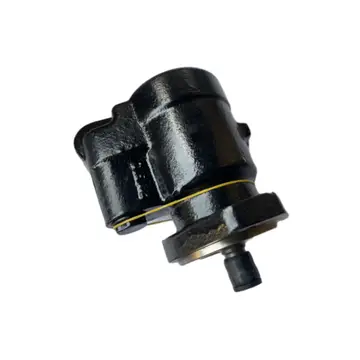
The power steering pump is driven by the engine and supplies the oil that gives the assist. Pumps differ in the mounting flange, the shaft and drive end, the port sizes and positions and the flow and pressure; the engine they bolt to also changes the mount. That is why one “truck power steering pump” listing can look the same as another and not be interchangeable. Our catalogue lists examples such as power steering pump 3407-00763 and power steering pump ZYB1418R311; they show the kind of part we handle, not a statement that either fits your truck.
Photograph:
- The pump label or casting number.
- The mounting flange and the shaft end, with the drive gear or pulley.
- The pressure and return ports, with the fitting type.
- The reservoir if it is on the pump, and the hose connections.
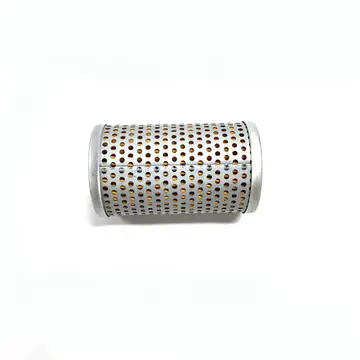
When you replace a pump, replace the filter or flush the system as the manual says, because debris from a failing pump travels through the circuit. Check the reservoir filter element too; see the steering reservoir filter page for an example of a part we list.
Steering gear
The steering gear (box) is often the most expensive steering part. A typical gear has a housing, input shaft, sector shaft, ports for the hydraulic assist, relief or control valve and an output arm. Because the same truck brand can use different gears, identify it from the plate on the housing, the output shaft spline and arm, the port positions and the mounting. Do not buy a gear by appearance; send the plate photo and the VIN. Before blaming a gear, check the adjustment, the fluid and the pump, because many complaints about “bad steering gear” are low fluid or a worn pump. Our catalogue also lists the angle steering gear and a steering shaft assembly.
Drag link and tie rod ends
Drag link ends and tie rod ends are wear parts; the joint is a ball in a socket with a dust boot, and play grows as the boot fails and dirt gets in. PE lists the drag link, tie rod, ball joint and steering damper among the common steering product families for trucks. When you search for “drag link end”, note that ends differ by thread (size, pitch and direction, left or right), taper, stud length, and whether the end clamps or screws into the rod. Left and right ends on the same rod often have opposite threads.
How to check and order:
- Support the front axle, with the wheels off the ground as the workshop manual describes.
- Have a helper turn the wheel back and forth while you watch each joint and the boot.
- Check that the taper nuts and split pins are present and tight; replace split pins on reassembly.
- Photograph the old end from the side, from the stud end and from the thread end, with a ruler. Write down the thread direction and measure the stud and the thread.
- Replace both ends of a tie rod if one is worn, and set toe after the job.
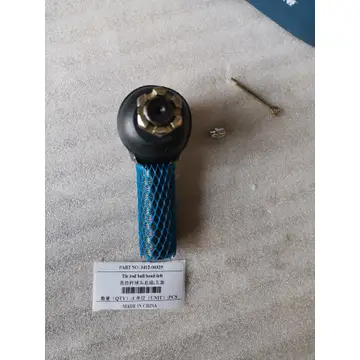
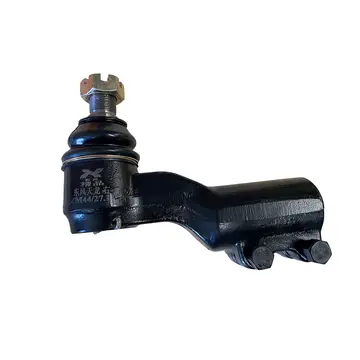
We list examples such as drag link end 3412-00325, tie rod end assembly 230003246 and the drag link end, left and right hand pages. They show how we describe these parts; they are not a statement that a given end fits your axle.
Hoses and pipes
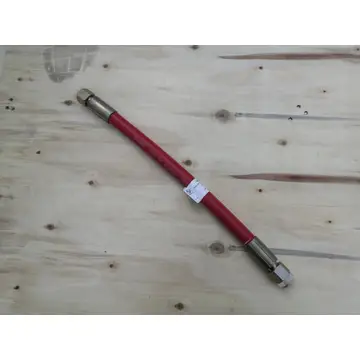
The hoses carry oil under pressure to the gear and return it to the reservoir. They crack, chafe or leak at the crimps. Identify them by the length, the fitting type and size at each end, the angle of the fittings and whether a pipe section is part of the hose assembly. Photograph the whole hose laid straight, with a ruler, and each end. Our power steering pressure hose is an example of the group. After replacing a hose, bleed the system as the manual says and check for leaks at working pressure.
Safety and ordering notes
- Never use a heat source on a steering part to loosen it; ask the workshop to use the method in the manual.
- Replace worn joints with parts of the same design, and check the alignment after the job.
- Torque values and tightening sequence come from the manual for your axle and gear. We do not publish figures.
- Keep the old parts until the new ones are fitted and checked; we compare them against photos if something does not match.
See also our first-year spares list, and the group page for steering parts for Chinese trucks and the axle and suspension parts page for the connected front-axle parts.
What to send us for a quote
- VIN photo and the year of build.
- Part number from the old part, or clear photos from the front, back and side with a ruler.
- For a pump: label, flange, shaft end, ports. For a gear: plate, ports, output shaft and arm.
- For ends: thread size and direction, taper and stud measurements, left or right.
- The symptom in one line, and the number of parts.
- Your country, so we can discuss packing and shipping.
Use the quote form or the contact page. We confirm the exact version before you pay.
Truck part groups to look at
Frequently asked questions
- What steering parts wear out first on a heavy truck?
- In general, the joints that move all day: drag link ends and tie rod ends (ball joints with boots), then hoses and seals on the hydraulic side. Pumps and gears wear more slowly but fail more expensively.
- How do I choose a truck power steering pump?
- Do not choose by truck name. Match the number on the old pump, the mounting flange, the shaft end and the port sizes, and tell us the engine and VIN. Send photos of all four and we confirm the version.
- What is a drag link end?
- It is the ball joint at the end of the drag link. The drag link connects the pitman (drop) arm of the steering gear to the steering arm at the wheel, and many drag links have replaceable ends.
- Is heavy steering a pump problem or a gear problem?
- It can be either, or just low fluid, a loose belt or a blocked hose. Check fluid level and condition, belt, hoses and filter first. Only then have the pump and gear pressure tested by a workshop.
- Can a truck still be steered if the power steering fails?
- In a hydraulic system with a direct mechanical link, the truck can be steered by hand with much higher effort, according to the general description of such systems. Do not drive a loaded truck like that; stop and repair it.
- Should I replace tie rod ends in pairs?
- Workshops usually replace both ends of one tie rod, and often both sides, because they have the same mileage. Set the toe after the job.
- What should I send for a steering gear quote?
- The housing plate, the VIN, photos of the ports, the output shaft and the arm, and the symptom. Do not order a gear by look alone.
Sources
- [1]Power steering. Wikipedia.
- [2]Drag link. Wikipedia.
- [3]Steering spare parts for trucks and commercial vehicles. PE Automotive.