Guides
Starting a Chinese Truck and Bus Parts Business: A Guide for Dealers and Stockists
How to start as a Chinese truck parts distributor: choose a range, build a first order, work with a China supplier and handle wrong parts.
- Prepared by
- CAP Parts Team
- Published
- Reading time
- 10 min read
- References
- 2 sources
Key takeaways
Start from the vehicles around you, not from a catalogue. Count which Chinese truck and bus brands run in your area, who services them and what they already buy, then pick a narrow range for those vehicles.
A first order is usually built in tiers: fast-moving service parts first, a thin layer of wear parts for engine, brakes and clutch, and special-order items you only quote and buy against a customer order.
The biggest daily risk of a parts business is the wrong part. Build the identification routine (nameplate, VIN, part number, photo) before you build the shelf.
Agree returns and wrong-part handling with the supplier in writing before the first shipment: who pays, what evidence is needed, and the time window. Terms are by agreement, so contact us.
Send us your market, the brands you service and a rough customer list, and we propose a first range and what we need from you. We do not state margins or minimums here.
On this page
- 01Who this guide is for
- 02Step 1: Look at the vehicles first
- 03Step 2: Choose a range, not a catalogue
- 04Step 3: Build the first stock order in tiers
- 05Step 4: Work with a supplier in China
- 06Step 5: Set the wrong-part routine before the first container
- 07Step 6: Price, freight and landed cost
- 08What to send us for a quote
Short answer: To start as a Chinese truck parts distributor, pick a narrow range for the Chinese brands that already run in your area, build a small first stock order in tiers, and set up an identification and returns routine before the first container ships. Work with a supplier who checks the exact part version before you pay. Terms, minimum orders and pricing are agreed with the supplier, not fixed by a guide.
Who this guide is for
This is for people who want to sell parts for Chinese trucks and buses as a business: a workshop owner who is tired of waiting for parts, a hardware or tyre shop adding a truck counter, a transport company that wants to supply its own and neighbouring fleets, or an importer looking at a first container. The phrases people search are “chinese truck parts distributor”, “truck parts business” and “become a spare parts dealer”. They all lead to the same practical questions: what do I stock, how much do I order, who do I buy from and what happens when it goes wrong.
Generic guides on starting an auto parts business are written for car parts and online shops. They are right on a few basics: define the business model first, know your true landed cost including freight, duties and claim reserves, and treat wrong-fitment returns as one of the biggest operational risks (WholesaleHelper guide). What they do not cover is heavy trucks and buses from China, where one model name can hide several axle, engine and cab variants. This guide fills that gap in plain steps. Everything here describes industry-typical practice and is a starting checklist, not a promise from us about terms.
Step 1: Look at the vehicles first
Before you think about a catalogue, walk your market. Write down, for your main customer area:
- which Chinese truck and bus brands you actually see (for example Sinotruk HOWO, Shacman, FAW, Dongfeng, Foton, Yutong, King Long, Higer);
- what work they do: tipper in quarry or mining, long-haul tractor, urban bus, coach;
- who services them today: the official dealer, independent workshops, the owners themselves;
- how customers buy parts now: counter, phone, WhatsApp, a mechanic who buys for the owner.
The reason for the walk is simple. Chinese manufacturers often use the same engine and gearbox families across several models, so a narrow range built around one or two platforms can cover more vehicles than a broad range spread over eight brands. Your local mix tells you which platforms matter. If you are not sure, our guides on how to identify a Chinese truck or bus before ordering parts and on HOWO against Shacman parts show how to read a vehicle and where brands overlap.
Also decide who you are selling to, because it changes everything else:
| Customer type | What they want | What it means for your stock |
|---|---|---|
| Owner-driver or small fleet | Quick availability, a known part number, a fair price | Fast-moving service items on the shelf, the rest on request |
| Workshop | A reliable source and clear identification | Wear parts by system, a person who can answer technical questions |
| Large fleet or mining contractor | Planned supply, documents, consistent quality | Quotes against a list, scheduled orders instead of shelf stock |
| Bus operator | Door, body and electrical parts as well as mechanical ones | Bus-specific lines, often special order |
Pick one or two of these rows to start. Trying to serve all four with a first small order spreads your money thinly.
Step 2: Choose a range, not a catalogue
A supplier can show you a catalogue of tens of thousands of lines. That is not your range. A dealer’s range is the short list of parts that turn over for the vehicles you identified in step 1. A practical way to build it is by system, then by how often a part is replaced:
| Layer | What goes in it | How to buy it |
|---|---|---|
| Service layer | Oil, fuel and air filter elements, belts, coolant parts, common seals and gaskets | Shelf stock, reordered regularly |
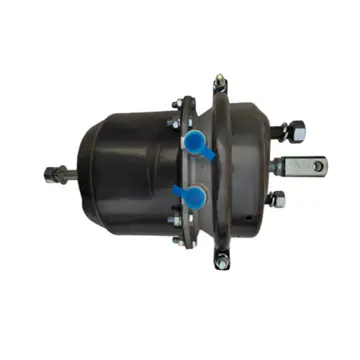
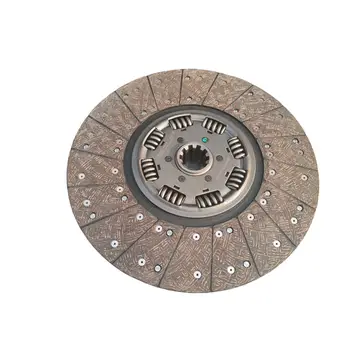
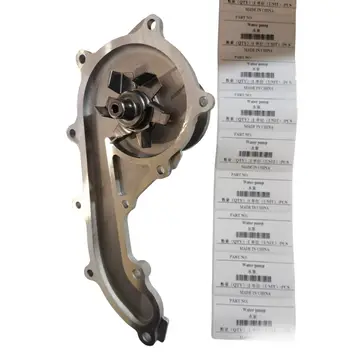
| Wear layer | Brake shoes, brake chambers, clutch disc and pressure plate, water pump, release bearing, suspension bushes | Small quantities of the versions you confirmed on local vehicles |
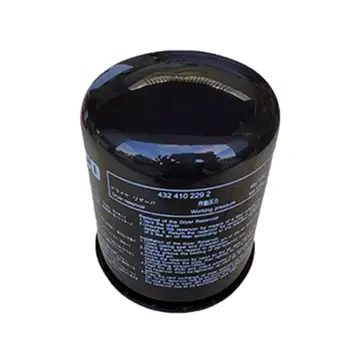
| Repair layer | Turbocharger, injectors, cylinder head gasket and overhaul kits, air dryer, gearbox and axle parts | Quote and buy against a customer order, or a single unit of the commonest version |
| Special order | Cab panels, lamps, bus doors and body parts, electronics | Always order on request with the VIN and a photo |
Browse our own catalogue to see how the groups are organised: engine parts, clutch and gearbox, air brakes, cooling and filtration and the bus side under bus parts. If the vehicles in your area are mostly HOWO or Sinotruk, the HOWO catalogue and part number guide explains how part numbers relate to vehicle variants. For engines, see the WD615 and WP10 guide.
Step 3: Build the first stock order in tiers
There is no single correct first order, and nobody can give you the right money figure without knowing your market. What experienced dealers describe is an order built in tiers, so that a wrong guess is cheap:
- Tier one, confirmed versions. Take two or three real vehicles from your customers and have the parts for them confirmed against the VIN, nameplate or old part. Order only those versions, in small quantities. This is your test of both the supplier and your own identification routine.
- Tier two, service items. Add the filter and belt lines, which almost every customer buys and where a wrong guess is least harmful because the same element is often used on several vehicles of one platform.
- Tier three, repair parts as single units. One unit of the most common turbocharger, water pump or clutch kit, so you can quote and deliver quickly while keeping money out of slow items.
- Everything else on request. You become the person who finds the part and quotes it, not the person who holds all of it.
Our first-year spare parts list guide works on the same logic from the fleet side and is a good template for what service customers will ask you for. For mining and quarry customers, the first-wear guide for Chinese tippers shows which systems drive repeat orders.
A short worked outline (an example for planning, not a quote and not a recommended quantity): a dealer who services mostly tippers in one region might choose tier one from two local tippers, tier two as filters and belts for the same engine platform, and tier three as one unit each of a clutch kit, a water pump and a brake chamber. A dealer with a bus-heavy customer base would swap the tippers for two buses and keep the same structure.
Step 4: Work with a supplier in China
The supplier is the other half of your business. Distributor pages from China typically show warehouse size, catalogue counts and the list of brands they represent; one large Chinese distributor, for example, lists a warehouse of over 30,000 square meters and more than 200,000 types of products (MultiStar Parts). Those numbers say how big a catalogue is, not whether the supplier will help you identify the right part. Judge a supplier on how it handles your first enquiries.
A checklist for the first conversation:
- Do they ask for the VIN, nameplate or old part number, or do they just quote what you typed? A supplier that never asks is guessing.
- Do they confirm the exact version before you pay, in writing, with a photo of what will be shipped?
- Is the quality level named per line (original-brand, OEM-source or aftermarket), and is the part number shown? Our genuine, OEM and aftermarket guide explains the difference.
- Who is your contact, and how fast do they answer a technical question?
- Packing and labelling. Are parts packed per item with the part number visible, so your counter staff can find them?
- Documents for your import side: ask what commercial documents they issue and check them with your clearing agent. Rules differ by country; our Africa import guide lists the usual items to confirm.
- Terms in writing. Pricing, minimum order, lead time and payment terms are by agreement; get them in writing rather than relying on a catalogue line.
For a longer supplier checklist, read truck spare parts supplier in China: a checklist. On prices, the HOWO spare parts price guide shows why quotes for “the same” part differ and how to compare them.
A word on authorised dealership versus independent distributor. Chinese truck makers sell original parts through their own channels and also appoint authorised dealers. Becoming an authorised dealer of a specific brand is an application to that manufacturer. Many independent stockists instead work with suppliers of original-brand, OEM-source or aftermarket parts. You can describe yourself accurately to customers either way, but do not imply an authorisation you do not hold.
Step 5: Set the wrong-part routine before the first container
Wrong parts will happen, and the way to survive them is a routine, not good luck. Fitment accuracy is described as one of the biggest operational risks in wholesale auto parts, because a wrong fitment creates returns and disputes (WholesaleHelper). For Chinese trucks the usual causes are:
- the model name matched but the engine, axle or gearbox variant did not;
- an old part number was replaced by a newer one and the customer gave the old one;
- the customer described the part in words, not with a number or photo;
- the vehicle was built for another market, for example left-hand-drive parts ordered for a right-hand-drive vehicle;
- two parts that look alike but differ in dimensions, which is why you compare against the old part.
A routine that works for most dealers:
- At the counter, record the VIN, the engine number and the gearbox type, and take a photo of the nameplate and of the old part with its markings. Keep them with the order.
- Send them to the supplier with the enquiry and ask the supplier to confirm the version in writing.
- Compare the part against the old one on arrival, before the customer takes it: mounting points, connector, length and any markings.
- If it is wrong, photograph it as received, including the packaging and the label, and report it within the window the supplier gave you.
- Keep a log of every return: part number, reason, who decided. After a few months, the log shows which parts need a stricter identification step.
Returns and claims are where a first deal can sour. Ask in advance who pays freight on a wrong-part return, what evidence is needed, how long you have to report it and whether credit or replacement is offered. Do not assume a catalogue says the same as the supplier. These points are by agreement; if you write to us, we answer them for your case.
Step 6: Price, freight and landed cost
Do your pricing from landed cost, not from the supplier’s list. A sensible landed-cost list includes the supplier price, inbound freight, customs duties and clearing, packing, storage, and a reserve for returns and wrong parts (WholesaleHelper). Then check what your customers pay today at the counter. We do not publish margins here: they differ by country, brand and part family, and a generic number would mislead you.
What to send us for a quote
If you want us to propose a first range, send:
- your country and city, and the type of customer you want to serve;
- the vehicle brands and models you see most, and ideally photos of two or three nameplates and the VINs;
- the parts you already sell or are asked for most often, with part numbers or photos if you have them;
- whether you plan to stock or only to order against customer orders;
- who handles import clearing on your side.
Use the quote page or the contact page. We confirm the exact version before you order, and terms are agreed with you directly.
Truck part groups to look at
Frequently asked questions
- How do I become a Chinese truck parts distributor?
- Choose the brands and vehicles in your area, build a narrow range, identify one or two suppliers, run a small first order in tiers and set up a returns and identification routine. Becoming an authorised dealer is a separate application to a specific manufacturer.
- Do I need to be an authorised dealer to sell Chinese truck parts?
- No. Many independent stockists sell original-brand, OEM-source or aftermarket parts without an authorisation. Do not claim an authorisation you do not hold. If you want to become an authorised dealer of a particular brand, you apply to that manufacturer.
- How big should my first stock order be?
- There is no universal number. Build it in tiers: confirmed versions for a few real vehicles, then service items, then single units of common repair parts, and order the rest only against customer orders. Terms and minimum orders are agreed with the supplier.
- What are the margins in truck parts?
- They vary by country, brand and part family, and published numbers are rarely reliable. Work out landed cost including freight, duties and a reserve for returns, then compare with what your customers pay locally.
- What if the supplier sends the wrong part?
- Photograph it as received with the label and packaging, compare it to the old part and report it within the window agreed in advance. Settle beforehand who pays freight on a wrong-part return and whether credit or replacement applies.
- Should I stock genuine, OEM or aftermarket parts?
- Decide per line and per customer. Ask each supplier to name the quality level and show the part number, and read our guide on genuine, OEM and aftermarket parts before you set your range.
- Can you help me with a first range?
- Yes. Send your market, the vehicle brands you see most and a few nameplate photos or VINs, and our team proposes a first range and tells you what we need from you.
Sources
- [1]How to Start a Wholesale Auto Parts Business Online. WholesaleHelper.
- [2]About MultiStar Parts. MultiStar Parts Co., Ltd..